





In collaboration with the THz free electron laser facility TELBE at the Helmholtz Zentrum Dresden-Rossendorf and ETH Zürich, researcher Fabian Graf conducted a short-term scientific mission, supervised by Steven L. Johnson and Martina Basini.
The mission focused on participating in a beamtime experiment aimed at the THz pumping and detection of circularly polarized Raman-active phonons in LaAlO₃.
A schematic of the circularly polarized THz field used in the experiment is shown in the figure.
This research project aims to advance the understanding and experimental exploration of spin wave phenomena in altermagnets and antiferromagnets. By leveraging cutting-edge spectroscopy techniques, we seek to investigate spin dynamics and magnon-phonon interactions in novel magnetic materials.
This project is a joint effort between:
Institute of Physics, Czech Academy of Sciences
Supervisor: Helena Reichlová
University of Konstanz
Supervisor: Sebastian Goennenwein
Development and Optimization of a Spin Wave Spectroscopy Setup
A new experimental setup for spin wave spectroscopy has been successfully implemented and optimized at the University of Konstanz, enabling high-precision measurements of spin dynamics.
Magnon-Phonon Coupling in YIG
Experimental measurements of magnon-phonon coupling in yttrium iron garnet (YIG) have been conducted, focusing on the interaction mechanisms affecting propagating spin waves.
This project consists in implementing a power dissipation experiment to the study of an altermagnetic MnTe-based Hall cross. Through this work, we aimed at bringing confirmation to theoretical predictions regarding the dissipation of currents generated by Hall effects, while also investigating new ways of characterizing altermagnetic materials.
This project is a colloration between Laboratoire des Solides Irradiés, Ecole Polytechnique (Valentin Desbuis) and Institute of Physics, Czech Academy of Sciences (Dominik Kriegner).
A schematic of the electrical configuration : A load charge is connected on the transverse contact to investigate the dissipation occuring in the system.
In collaboration with the gruop Nanoscaled Magnonic Hybrids at Rheinland-Pfälzische Technische Universität (RPTU) in Kaiserslautern, we investigated the generation of acoustic phonons via magnetoelastic coupling by applying a radio frequency (RF) field to patterned magnetic structures. Using Brillouin Light Scattering (BLS) spectroscopy, the interaction between the magnetization dynamics and the substrate’s elastic modes is analyzed to explore energy transfer mechanisms.
This Short-Term Scientific Mission (STSM) focuses on unraveling the structural and electronic properties of magnetically doped and intrinsically nonmagnetic ternary van der Waals (vdW) compounds.
Collaboration
This project is a joint effort between:
Surface and Electronic Structure Analysis
This research project is part of the exploration of non-centrosymmetric materials for spintronics. The compound ScFe₄Al₈, recently identified as a promising candidate, has structural and magnetic properties that could generate non-linear transport effects. The aim is to assess its potential for future electronic devices exploiting broken symmetry.
Collaboration
Analysis of the current–voltage curves obtained on samples with a thin film of ScFe₄Al₈ reveals weak but detectable non-linear contributions for intermediate experimental conditions of temperature and applied magnetic field. These signatures, extracted using the delta method, translate into variations in slope depending on the magnetic field. Although still to be confirmed, these results constitute an initial indication consistent with the expected behaviour for non-centrosymmetric materials.
As part of the search for altermagnetic materials, two uranium based materials are selected: UNiGa and UCr2Si2C. This STSM focused on synthesizing phase pure UNiGa and UCr2Si2C samples and single crystals of UCr2Si2C that is large enough for single crystal physical property measurements.
Collaboration
This project is a joint effort between:
Supervisor: Dr. Eteri Svanidze
Research Highlights
Arc melting is successfully performed to obtain UCr2Si2C without the need for 30 day annealing process.
A single crystal of size 1400 um x 170 um is separated from the arc melted button. Composition of single crystal is confirmed by EDX analysis as UCr2Si2C, which can be used for various measurements such as resistivity, Hall effect, heat capacity, and strain.
Supported by the COST program, the investigation of the research teams led by Dr. Wenjing Yan at the University of Nottingham and Dr Alexey V. Scherbakov at Technique Universität Dortmund explored a new area of research: the interaction between magnons and phonons in a 2D van der Waals (2D-vdW) multiferroic materials. In addition to multiferroicity, such materials present distinct advantages since their electronic, optical, and symmetry characteristics can be further engineered through “Lego-type” stacking of atomic layers.
Research Highlights:
During this short-term mission of Dr. Yan to TU Dortmund, the researchers performed magneto-optical pump-probe experiments on hybrid phononic nanostructures based on multiferroic CuCrP2S6 (CCPS) compound, which were specifically engineered to excite different phonon modes. Results from temperature- and magnetic-field-dependent measurements indicated desirable magnon-phonon coupling in CCPS. These insights suggest promising avenues for future research on the coherent phononic control of magnetism in 2D systems.
In collaboration with the Institute of Physics of Advanced Materials, Nanotechnology and Photonics (IFIMUP), University of Porto, researcher Muhammad Faisal Ashraf conducted a Short-Term Scientific Mission (STSM) under the framework of COST Action CA23136 (CHIROMAG), supervised by Prof. Agostinho Moreira. The mission focused on investigating spin-lattice interactions in Ti-doped GdMnO3 single crystals using temperature-dependent Raman spectroscopy. The aim was to investigate how magnetic order affects lattice vibrations and how chemical substitution modifies spin-lattice coupling in multiferroic manganites.
Research Highlights:
During this STSM, Raman spectra were recorded from 10 K to 300 K, tracking the symmetrical stretching phonon mode near magnetic transition regions. The deviation of the phonon wavenumber from the thermal expansion fit (dashed curve) is associated with spin-lattice coupling dominated by ferromagnetic interactions and is stronger in the Ti-doped sample than in the undoped crystal, even though the Néel temperature (TN) decreases because Ti is non-magnetic. These observations provide direct experimental evidence of spin-phonon coupling and offer new insight into how lattice vibrations interact with magnetic order in multiferroic complex oxides.
During a Short-Term Scientific Mission (STSM) within COST Action CHIROMAG (CA23136), Dr. Alberto Anadón Barcelona carried out a research stay at TU Wien, hosted by Amalio Fernández-Pacheco.
The mission focused on the fabrication and magneto-optical characterization of perpendicularly magnetized multilayers integrated onto 3D nanostructures. Multilayer stacks were optimized using magnetron sputtering and conformally deposited onto 3D FEBID nano-scaffolds previously fabricated at INMA-CSIC.
Research Highlights:
Takeaki Gokita conducted a Short-Term Scientific Mission (STSM) within the framework of COST Action CHIROMAG (CA23136) at the Max Planck Institute for Chemical Physics of Solids, hosted by Dr. Claire Donnelly.
This STSM focused on imaging magnetic states deposited on curved surfaces using magnetic force microscopy (MFM) and nitrogen-vacancy magnetometry to investigate how curvature influences magnetic properties.
Research Highlights:
Observation of circular magnetic objects on curved surfaces
We observed circular magnetic objects in [Pt/Co] multilayers formed on curved surfaces using MFM. The local magnetic fields generated by the MFM tip may contribute to the stabilization of these circular magnetic objects.
This project is a collaboration between
Institute of Physics, Czech Academy of Science, Czech Republic
Dr. Sriram Sundaresan
and
Johannes Gutenberg University, Mainz, Germany
Supervisor: Prof. Dr. Eva Rentschler
Research Highlight:
A chirality-dependent magnetic response was identified in a family of Fe(II) thiadiazole spin crossover complexes investigated during the STSM. While spin crossover compounds typically switch between low-spin and high-spin states in response to temperature or other external stimuli the present system shows a remarkable dependence on the chiral composition of the molecular material. The enantiopure complexes undergo a complete thermal spin crossover, displaying a transition temperature (T₁/₂) of approximately 195 K. In contrast, the racemic form remains stabilised in the high-spin state over the same temperature range and does not exhibit a thermal spin transition. This clear difference between enantiopure and racemic forms highlights the important influence of chirality and crystal packing on the magnetic behaviour of spin crossover systems. The accompanying χMT measurements (Figure below) further show chirality-dependent magnetic response.
This Short-Term Scientific Mission (STSM), carried out within COST Action CA23136 (CHIROMAG), was conducted as a collaboration between the University of Messina (Italy) and Bolu Abant İzzet Baysal University (Turkey), hosted by Dr. Carmelo Corsaro and Dr. Enza Fazio, and led by Dr. Mustafa Erkovan.
Research Highlight:
A reliable and reproducible growth protocol for Co/Cu multilayers was established using combined profilometry, XPS, and XRR calibration, enabling precise thickness and interface control and providing a solid baseline for SAF-oriented studies.
A wedge-based variation of the Cu spacer thickness was used to explore the interlayer exchange coupling regime and define the SAF-relevant parameter space for subsequent interface-driven spintronic studies.
Through the Short-Term Scientific Mission) STSM support program of CHIROMAG (CA23136) Cost Action Dr. Ramazan Kizil conducted the following research in collaboration with the research team of the host Dr. Agostinho Moreira at University of Porto, Porto Portugal.
The Participating Institutes:
Istanbul Technical University, Chemical Engineering Department,
Nanostructured Electronic Devices Lab
Supervisor Dr. Ramazan Kizil
Institute of Physics of Advanced Materials, Nanotechnology and Photonics (IFIMUP), University of Porto
Supervisor Dr. Agostinho Moreira
Research Highlights:
Synthesis and Characterization of Chiral Molecular Layer Junction In Metallic Nanowires
A Chiral molecule of (S)-2-Aminobutane-1,4-dithiol was polymerized on electrodeposited metal surfaces (Ag or Ni) inside a membrane and covered by Ni electroplating in Istanbul Technical University. The chirality conferred nanowires were characterized using FEG-SEM (Figure 1).
Raman Spectroscopic Characterization and Circular Polarization-Resolved Raman Optical Activity
The chemical composition of the chiral molecular layer incorporated in nanowires were meticulously investigated using Raman spectroscopy. First, 633 nm Red laser excitation was used to collect fluorescence-free Raman spectra (inset image) of the nanoscopic Chiral entity in the wire. After carefully elucidating the chemical structure of the chiral junction, circularly polarized Green laser was used to detect chiroptical response from the junction. Raman optical activity was observed in several Raman modes due to the chiral carbon atom (Figure 2)
In collaboration with with Dr. Unai Atxitia from CSIC, Dr. Rubén M. Otxoa from Hitachi- Cambridge Laboratory Lab. conducted a Short-Term Scientific Mission (STSM) under the framework of COST Action CA23136 (CHIROMAG).
The mission of this STSM was to develop a theoretical description on how spin–orbit-torque induces effective fields to control soliton motion and to explore regimes where the topological charge becomes field-dependent. Beyond fundamental understanding, the stay aimed to translate
these insights into a new schemes for nanoscale control, sensing, and unconventional information processing.
Research Highlights:
In this work, we demonstrate that for topologically unprotected 90° domain walls, we derive a closed relativistic velocity law and a Lorentz-like width contraction where the topological charge becomes kinematically adaptive rather than conserved. This breakdown of topological
conservation is not merely a curiosity: it produces strongly enhanced mobilities, enabling velocities up to six times higher than topologically protected walls under the same driving conditions. Atomistic simulations confirm the theory without fitting parameters, yielding clear,
experimentally testable predictions and revealing a deeper link between soliton kinematics, relativistic contraction, and symmetry constraints.
During a Short-Term Scientific Mission (STSM) at Politecnico di Bari, supervised by Prof. Riccardo Tomassello, we developed a theoretical model to describe how spin waves behave in a two-sublattice antiferromagnet when intersublattice Dzyaloshinskii–Moriya interaction (DMI) is present.
Research Highlights:
We found that this type of DMI has a strong effect on the system. It increases the frequency of the higher spin-wave mode and changes the other from a circular motion to a elliptical one.
Our model based on two macrospins explains the evolution of these two modes under an external magnetic field, with validity confirmed by numerical simulations . These results demonstrate that chiral interactions can control spin dynamics, opening new avenues for utilizing interlayer DMI in tunable spintronic terahertz devices.
STSM Grantee: Muhammad Faisal Ashraf
Host Institution: IFIMUP – University of Porto
Supervisor: Prof. Agostinho Moreira
In collaboration with the Institute of Physics of Advanced Materials, Nanotechnology and Photonics (IFIMUP), University of Porto, researcher Muhammad Faisal Ashraf conducted a Short-Term Scientific Mission (STSM) under the framework of COST Action CA23136 (CHIROMAG), supervised by Prof. Agostinho Moreira, with support in Raman spectroscopy measurements from Dr. Rui Vilarinho Silva. The mission focused on investigating spin-lattice interactions in Y-doped GdMnO3 single crystals using temperature-dependent Raman spectroscopy. The aim was to investigate how magnetic order affects lattice vibrations and how chemical substitution modifies spin-lattice coupling in multiferroic manganites.
Research Highlights
During this STSM, Raman spectra were recorded from 10 K to 300 K, tracking the symmetrical stretching phonon mode near the magnetic transition region. The phonon wavenumber shows a clear downshift relative to the expected anharmonic thermal expansion behavior (dashed curve) indicating dominant ferromagnetic (FM) interactions, while an upshift would correspond to antiferromagnetic (AFM) interactions. Compared with pure GdMnO3, the characteristic minimum near 20 K becomes suppressed in the Y-doped samples, suggesting modification of the magnetic exchange interactions by Y substitution. The observed deviation also indicates that FM correlations develop already above the Néel temperature (TN ≈ 40 K), providing clear evidence of spin-lattice coupling in the system.
This STSM explores the integration of thin films of BiTe/Ta and SbTe/Ta and ultrathin CoFeB/MgO grown in different laboratories. This project is a collaboration between the Faculty of Sciences of the University of Porto (Portugal, Dr. João Pedro Araújo) and the Eindhoven University of Technology (Netherlands, Dr. Diana Leitao), and led by Francisco Moutinho.
Research Highlights:
Established an experimental protocol for the integration of thin film growth combining ion milling, deposition, and annealing. Milling rate was calibrated using the profilometer, and magnetic characterization was performed via MOKE.
This Short-Term Scientific Mission (STSM), carried out within COST Action CA23136 (CHIROMAG), was conducted as a collaboration between the University of Messina (Italy) and Gebze Technical University (Turkiye), hosted by Dr. Carmelo Corsaro and Dr. Enza Fazio, and led by Dr. Mehmet Emre Aköz.
Research Highlights
During the STSM, Co/Cu/Co multilayers with systematically varied Cu spacer thicknesses were fabricated by magnetron sputtering and characterized using complementary XRR, XPS, and MOKE techniques. The study established a reliable thin-film growth and thickness-control platform while providing initial experimental insight into the parameter space required to achieve synthetic antiferromagnetic (SAF) coupling. The mission also strengthened knowledge transfer and scientific collaboration between the University of Messina and Gebze Technical University, providing a foundation for future studies on magnetic multilayers and next-generation spintronic technologies.
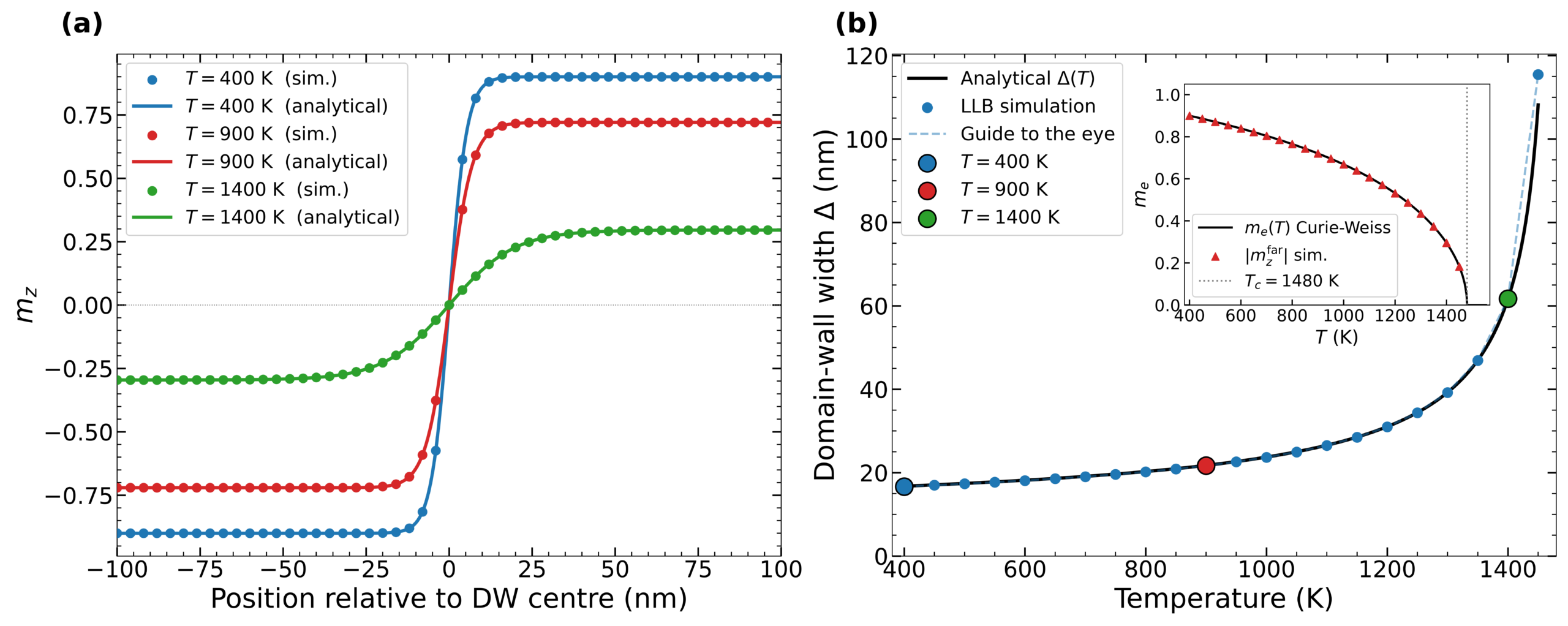
During a Short-Term Scientific Mission (STSM) at the Instituto de Ciencia de Materiales de Madrid (ICMM-CSIC), researcher Ali Hasan from the University of Messina, Italy (PhD supervisor: Prof. Giovanni Finocchio), worked under the supervision of Prof. Oksana Chubykalo-Fesenko on the implementation of a GPU-based micromagnetic solver supporting the Landau-Lifshitz-Bloch (LLB) equation, which describes magnetization dynamics at finite temperatures including above the Curie point.
Research Highlights
Through dedicated seminars and discussions with Prof. Chubykalo-Fesenko, a clear understanding of the LLB equation terms and their temperature-dependent parameters was established. The full LLB CUDATM kernel was then implemented and validated against the analytical prediction for domain wall width as a function of temperature. The comparison shows excellent agreement across a wide temperature range up to the Curie temperature, as shown in the figure.
This work enables large-scale GPU simulations of finite-temperature switching and ultrafast demagnetization in chiral magnetic systems, opening new possibilities for studying thermally driven phenomena in materials relevant to the CHIROMAG network
COST (European Cooperation in Science and Technology) is a funding agency for research abd innovation networks. Our Actions help connect research initiatives across Europe and enable scientists to grow their ideas by sharing them with their peers. This boosts their research, career and innovation.
| Cookie | Durata | Descrizione |
|---|---|---|
| cookielawinfo-checkbox-analytics | 11 months | This cookie is set by GDPR Cookie Consent plugin. The cookie is used to store the user consent for the cookies in the category "Analytics". |
| cookielawinfo-checkbox-functional | 11 months | The cookie is set by GDPR cookie consent to record the user consent for the cookies in the category "Functional". |
| cookielawinfo-checkbox-necessary | 11 months | This cookie is set by GDPR Cookie Consent plugin. The cookies is used to store the user consent for the cookies in the category "Necessary". |
| cookielawinfo-checkbox-others | 11 months | This cookie is set by GDPR Cookie Consent plugin. The cookie is used to store the user consent for the cookies in the category "Other. |
| cookielawinfo-checkbox-performance | 11 months | This cookie is set by GDPR Cookie Consent plugin. The cookie is used to store the user consent for the cookies in the category "Performance". |
| viewed_cookie_policy | 11 months | The cookie is set by the GDPR Cookie Consent plugin and is used to store whether or not user has consented to the use of cookies. It does not store any personal data. |
Silvia Picozzi received her BSc in Physics at Univ. L’Aquila, Italy (1994) and her PhD in Materials Science from Univ. Camerino, Italy (1998). She is currently Full Professor of Condensed Matter Theory at the Materials Science Department of University Milan Bicocca (Milan, Italy), after being Director of Research at Consiglio Nazionale delle Ricerche (CNR) at the Institute for Superconducting and Innovative materials and Devices (SPIN) in Chieti (Italy). She is a Fellow of the American Physical Society (2019, Division of Materials Physics). She coordinated a Starting Grant from the European Research Council (2008-2012) and was involved (as coordinator or responsible of the CNR-Unit) in 3 PRIN national projects, one H2020 Marie Curie ITN, 1 FIRB project, 2 Next Generation-EU PNRR initiatives. Since 2006 she coordinates a small scientific group and she has supervised 25 post-docs in the entire career. She’s coauthor of > 230 publications in peer-reviewed journals. Her activity is centered on High-Performance Computing simulations based on density functional theory for solid-state materials (including surfaces, nanostructures, interfaces). Her focus is on spin degrees of freedom in both magnetic and non-magnetic materials and on their interplay with other types of cooperative phenomena (ferroelectricity, charge-ordering, multiferroicity).
Franca Albertini is Research Director at the Italian National Research Council (CNR) and leader of the Magnetic and Multiferroic Materials Group at the Institute of Materials for Electronics and Magnetism (IMEM). Since 2023 she is visiting professor at the Institute Jean Lamour, University of Lorraine – CNRS (1 month/y). Her main interests are in magnetic and multifunctional properties of bulk and nanoscale materials for biomedical applications. Her current activity is mainly focused on the understanding and tuning the multifunctional properties of magnetic shape memory Heusler compounds, where magnetic and structural degrees of freedom play a primary role.
She has served different scientific societies (e.g. IEEE-Magnetics, European Magnetic Association, European Physical Society) and has been the president of the Italian Magnetism Association (2017-2021). She has been general chair of JEMS (2012) and IEEE-Advances in Magnetics (2020-21).
Ron works at the National Institute of Standards and Technology (NIST) in Boulder, Colorado, USA. He researches magnetic metrology, magnetic nanoparticles, and superconductor losses. He was the leader of the NIST Magnetics Group and was the chief editor of the Journal of Research of NIST. He was the editor-in-chief of IEEE Transactions on Magnetics, was the founder and chief editor of IEEE Magnetics Letters, and led the establishment of IEEE Transactions on Quantum Engineering. He is a Fellow of the IEEE and is currently the president of the Magnetics Society.
Julie Grollier is a senior researcher in the Laboratoire Albert Fert south of Paris, where she leads the Neuromorphic Physics team. Her work is interdisciplinary, from the physics of spintronic and resistive switching materials to the development of learning algorithms for Artificial Intelligence.
For more information: https://www.neurophysics.cnrs-thales.fr/people/julie-grollier/
Dr. Vincent Cros is a CNRS senior researcher at the Laboratoire Albert Fert (CNRS/Thales/Université Paris-Saclay) in Palaiseau, France. A specialist in spintronics and spin-orbitronics, his work focuses on magnetization dynamics, spin torque phenomena, and their applications in spintronic nanosystems, particularly for radiofrequency devices relevant to IoT, sensing, and AI. His research spans nonlinear dynamics and synchronization in spin torque nano-oscillators, the physics and the use of magnetic topological textures, and spin-orbit torque-driven dynamics. Dr. Cros has led numerous national, European, and international projects, and since 2023, he has served as CNRS director of the national spintronics initiative PEPR SPIN, part of France’s 2030 investment strategy. In recognition of his contributions, he received the Carnot Prize from the French Academy of Sciences in 2013.
Yue Zhang is currently full professor and deputy dean of School of Integrated Circuit Science and Engineering, Beihang University, China. He receiv ed B.S. in optoelectronics from Huazhong University of Science and Technology, Wuhan, China, in 2009, M.S. and Ph.D. in microelectronics from University of Paris Sud, France, in 2011 and 2014, respectively. He was a postdoctoral researcher in CNRS (Centre National de la Recherche Scientifique), France. His current research focuses on spintronics, emerging non volatile memory technologies and hybrid low power circuit designs. He has authored more than 10 0 scientific papers , including Nature Materials, Nature Electronics, Nature Communications, Science Advances, Applied Physics Reviews, Advanced Functional Materials, Nano Lette rs , IEEE Electron Device Letters
IEEE transactions on Circuits and Systems I: Regular Papers, etc.
Yue Zhang is the recipient of the National Science Fund for Excellent Young Scholars in 2021, the Young Elite Scientist Sponsorship Program of CAST in 2017 the 2017 IEEE CAS Society’s Guillemin Cauer Award for the best paper published in the IEEE transactions on Circuits and Systems I: Regular Papers , the 19 Best Paper Award, the NEWCAS’13 Best Paper Award, the ESREF’14 Best Poster Award.
He is serving IEEE transactio ns on Circuits and Systems I: Regular Papers and IEEE Access as associate editor and serve d as general chair of NANOARCH’19.
Paola Tiberto attended from 1990 to 1993 a Ph.D course in experimental physics held by the Physics Department of Torino Politecnico. She is working at the National Institute for Metrological Research, INRIM) in the Advanced Materials Metrology and Life science Division. The National Institute for Metrological Research (INRIM) focuses on studying metrology (measurement sciences), and on conducting research on materials, as well as on developing innovative technologies and devices. In this context, she focused her scientific activity basically on the following topics: phase transformation in metastable ferromagnetic alloys; magnetotransport properties of thin films and multilayer; study of magnetization process in materials obtained by means of non-equilibrium technique (nanogranular powder and thin films); magnetic thin film patterning via nanolithographic techniques; magnetic nanoparticles synthesized via chemical route. She is author of more than 300 scientific papers published in International, peer-reviewed Journals in the field of magnetism. She served as Editor in the journal of Materials Chemistry and Physics from Elsevier (https://www.journals.elsevier.com/materials-chemistry-and-physics/editorial-board/paola-tiberto). She has taken part in the technical program committees of leading international conferences in magnetism and spintronics and has organized more than five international conferences and workshops, including several events sponsored by the IEEE Magnetics Society – Italy Chapter. She was President of the Italian Association for Magnetism (AIMagn) (www.aimagn.org) until December 2024, promoting scientific initiatives, national research networking, and young researchers’ engagement in the field of magnetism. She has been responsible of several research projects (i.e. national and EU in H2020 and Horizon Europe) mainly focused on magneto-electric properties of magnetic materials.
Mathias Kläui is professor of physics at Johannes Gutenberg-University Mainz and adjunct professor at the Norwegian University of Science
and Technology.
He received his PhD at the University of Cambridge, after which he joined the IBM Research Labs in Zürich. He was a junior group
leader at the University of Konstanz and then became associate professor in a joint appointment between the EPFL and the PSI in Switzerland before moving to Mainz. His research focuses on nanomagnetism and spin dynamics on the nanoscale in new materials. His research covers from blue sky fundamental science to applied projects with major industrial partners. He has published more than 440 articles and given more than 300 invited talks and he is a 2024 Clarivate Highly Cited Researcher. He is a Fellow of the IEEE, IOP, APS, the European Academy of Sciences and the German National Academy of Science and Engineering and has been awarded a number of prizes and scholarships and 3 Grants by the European Research Council. He is a Fellow of the University of Tokyo and he has been one of the 2020/2021 IEEE Magnetics Society Distinguished Lecturers. Contact details and more information at www.klaeui-lab.de
Prof. Dr. Hans J. Hug received his Ph.D. in Physics from the University of Basel in Switzerland in 1993, and his Habilitation on Quantitative Magnetic Force Microscopy at Low Temperatures on Ferromagnetic Materials and High Temperature Superconductors in 2000. He and his team won the Swiss Technology Award for the Development of a High-Resolution Magnetic Force Microscope for the Hard-Disk Industry in 2003. After rejecting a position as a full professor at the University of Twente in the Netherlands in 2003, he was promoted to Titularprofessor at the Department of Physics of the University of Basel and took a position as a laboratory head at Empa – the Swiss Federal Laboratories for Materials Testing and Research in 2004.
Prof. Hug also served as the director of the ETH domain CCMX platform for Nano- and Micrometer Scale Materials Characterization and as a supervisory board member in two startup companies.
Dr. Arjun Unnikrishnan is currently a DST-Inspire Faculty Fellow (equivalent to Assistant Professor) at the Solid-State and Structural Chemistry Unit (SSCU), Indian Institute of Science (IISc), Bengaluru. He holds a Ph.D. in Physics from IISER Thiruvananthapuram (2019), and an M.Sc. and B.Sc. in Physics from the University of Calicut. He has been awarded the prestigious DST-Inspire Faculty Fellowship (2020) and the Institute Post-Doctoral Fellowship at IIT Bombay. Dr. Unnikrishnan has held visiting fellow positions at Purdue University, USA (2023–2024), and the University of Augsburg, Germany (2022). Previously, he worked as a Postdoctoral Fellow at IIT Bombay. His research focuses on experimental condensed matter physics, particularly the low-temperature properties of novel magnetic materials. He is also a co-inventor in the patent ‘Cooling substances for ultrahigh-voltage-compatible adiabatic demagnetization cooling at very low temperatures’ filed by the University of Augsburg. He has published 11 international research papers (with one under review) and delivered several talks on international platforms.
Dr B.DIENY has been conducting research in magnetism and spin electronics for 35 years. In 2001, he launched SPINTEC laboratory (Spintronics and Technology of components) in Grenoble and cofounded two startup companies in 2006 and 2014. He received two Advanced Research grants from the European Research Council in 2009 and 2014 related to hybrid CMOS/Magnetic Integrated Electronics. He was nominated IEEE Fellow in 2010, received the De Magny Prize from French Academy of Sciences in 2015, the IEEE Magnetics Society Achievement Award in 2019 and has been nominated Knight of the Legion of Honor in 2025. He published more than 500 papers primarily in the field of nanomagnetism and spinelectronics, and filed more than 75 granted patents in particular on Magnetic Random Access Memory technology. His field of expertise covers a broad spectrum from basic research in nanomagnetism and spin-electronics to functional spintronic devices. In 2009, he also launched an activity at the interface between nanomagnetism and biology with a particular focus on magnetically induced mechanical stimulation of cancer cells and pancreatic cells with potential applications for cancer and diabetes treatments.
Hyunsoo Yang is a Professor in the Department of Electrical and Computer Engineering, National University of Singapore (NUS), working on various magnetic materials and devices for spintronics applications. He worked at C&S technology and Intelligent Fiber Optic Systems, California. He received his Doctorate from Stanford University. From 2004-2007, he was at IBM Almaden Research Center. He has authored more than 260 journal articles, given 200 invited presentations, and 20 patents. He was a recipient of the Outstanding Dissertation Award from the American Physical Society (GMAG), IEEE Magnetics Society Distinguished Lecturer, Minister of Science ICT award, Mid-Career Award of the IEEE Magnetics Society, AAIA Fellow, and IEEE Fellow.
Kai Liu is a Professor and McDevitt Chair in Physics at the Georgetown University. He received his Ph.D. in Physics from the Johns Hopkins University in 1998, and carried out postdoctoral research at UC San Diego. He joined the UC Davis faculty in 2001, and moved to the Georgetown University in 2018. His research interest is in experimental studies of magnetism and spin transport in nanostructured materials. He was recipient of an Alfred P. Sloan Research Fellowship and a UC Davis Chancellor’s Fellowship. He is also elected Fellow of the National Academy of Inventors, American Association for the Advancement of Science, Institute of Physics (UK), American Physical Society, and IEEE. He served as Chair of the International Union of Pure and Applied Physics (IUPAP) Commission on Magnetism (2021-2024), and General Chair of the 2016MMM in New Orleans.
Silvia Tacchi is a researcher at the Perugia Secondary Units of the Istituto Officina dei Materiali (IOM) of the Italian National Research Council (CNR). She received her PhD in Physics from the University of Perugia, Italy, in 2002. She has long-standing expertise in the study of magnetization dynamics in low dimensional systems by using both conventional and micro-focused Brillouin light scattering (BLS) spectroscopy. Her main research interests are magnonic crystals, Dzyaloshinskii-Moriya interaction, and magnetic properties of thin films, multilayers, lateral confined systems.
Dr. Oksana Chubykalo-Fesenko is a senior scientist in the Material Science Institute of Madrid, CSIC, Spain. She obtained M.S. and PhD degrees from Kharkov State University, Ukraine. She worked in the Clarendon Laboratory, Oxford (UK), Complutense University, Madrid (Spain) University of Milano (Italy), University of the Basque Country (Spain), Almaden Research Center, IBM, San Jose (USA) etc. She has co-authored more than 200 scientific publications. Her main interests are centered on multi-scale modeling of magnetic materials: ab-initio, atomistic and micromagnetic simulations and temperature effects. She is currently working on magnetization dynamics, core-shell magnetic nanoparticles, magnetic nanowires and magnetic hyperthermia. She currently acts as a coordinator of Spanish network of Spintronics, she is an associated editor of the Journal of Magnetism and Magnetic materiales, an IEEE fellow, a member of IEEE Magnetics Society AdCom.
Mark Stiles is a NIST Fellow in the Alternative Computing Group in the Physical Measurement Laboratory. He received a M.S./B.S. in Physics from Yale University, and M.S. and Ph.D. degrees in Physics from Cornell University. Following postdoctoral research at AT&T Bell Laboratories, he joined the research staff at NIST. Mark’s research, published in over 175 papers, has focused on the development of a variety of theoretical methods for predicting the properties of magnetic nanostructures and has recently shifted to alternative methods of computing. He has helped organize numerous conferences and has served the American Physical Society on the Executive Committee of the Division of Condensed Matter Physics and as Chair and on the Executive Committee of the Topical Group on Magnetism. He has also served as a Divisional Associate Editor for Physical Review Letters, served on the Editorial Board of Physical Review Applied, and is an Associate Editor for Reviews of Modern Physics. Mark is a Fellow of both the American Physical Society and the IEEE and has been awarded the Silver Medal from the Department of Commerce.
Hari Srikanth is a Distinguished University Professor at the University of South Florida. He received his Ph.D. in experimental condensed matter physics from the Indian Institute of Science, Bangalore and has been at USF since 2000 where he leads the Functional Materials Laboratory. He is also the Director of Florida Institute of Emergent Low-Dimensional Quantum Materials (FIELD-QM). Hari’s research spans a wide range of topics like quantum materials, magnetic materials and nanoscience. At USF Hari has graduated 24 PhD students and mentored over 15 postdoctoral scholars in his career. He has over 320 journal publications (with 12,600+ citations and an h-index of 64) and has given over 225 invited talks around the world. In 2019, he was an IEEE Magnetics Society Distinguished Lecturer. He is a Fellow of the American Physical Society, Fellow of the Institute of Physics and a Senior Member of IEEE. He currently serves as an Associate Editor for Physical Review. Hari has been closely involved with the MMM and INTERMAG conferences for over 20 years serving as Publication Editor, Publication Chair and on program committees. His is the Special Events Chair for the MMM 2025 and also serves on the IEEE Magnetics Society AdCom. Hari is a recipient of an Alexander von Humboldt Research Award and a Fulbright Scholar Award.
J. Carlos Rojas-Sánchez received his BSc from Universidad Nacional de Ingeniería (Lima, Peru) in 1999, and his MSc and PhD from Institute Balseiro (Bariloche, Argentina) in 2004 and 2011, respectively. After 4 years as a post-doc in Grenoble (CEA, Spintec and Neel Institute) and Palaiseau (UMPhi CNRS/Thales, now Albert Fert Laboratory), he achieved a permanent position as CNRS researcher in France. He is working at the Jean Lamour Institute in Nancy, France, since October 2015. He has also been the Head of IJL’s cleanroom facilities from 2018 to 2023. His main research interests span from spintronics to spin-caloritronics and spin-orbitronics. He is also the organizer of International Workshops in Spintronics held in Latin America such as Spin Peru 2019, Spin Argentina 2022 and Spin Galapagos 2025 in Ecuador. In 2020 he received the CNRS Bronze Medal award (for young researchers). He is the Principal Investigator of different projects in France and Europe such as H2020 MSCA RISE Ultimate-i. In 2023, he was awarded an ERC Consolidator grant for his MAGNETALLIEN project.
Takahiro Moriyama is a full professor at Nagoya University, Japan where he leads a team of spintronics mobs focused on antiferromagnetism and its terahertz dynamics. He received his B.S and M.Eng. in materials science from Tohoku University, and his Ph.D. in physics from University of Delaware where he consistently studied on spintronics and magnetic materials. After a postdoc at Cornell University and assistant/associate professor at Kyoto University, He has held the current position since 2023. For more information, see https://spintronics.mp.pse.nagoya-u.ac.jp/index_e.html
Christopher Marrows is Professor of Condensed Matter Physics at the University of Leeds, and was previously a Reader in the same subject, a lecturer, and before that an 1851 research fellow, funded by the Royal Commission for the Exhibition of 1851 following his PhD in 1997.
His research programme concerns materials and devices for future information technology, in particular devices based on electron spin – so-called spintronics. This involves a wide-ranging investigation of nanoscale and thin film magnetic artificial structures, prepared largely by sputter deposition. Such materials are useful in the quest for ever more complex spin electronic devices – systems where the spin, as well as charge, of the electron is used in the storage and processing of information. Current areas of interest are chiral magnetism and magnetic skyrmions, spin torques in magnetic nanostructures, artificial frustrated systems, and the quantum spin Hall effect.
Stéphane Mangin is a Professor at the University of Lorraine and conducts his research within the “Spintronics and Nanomagnetism” team at the Institut Jean Lamour in Nancy, France. He is an internationally recognized expert in spintronics and ultrafast magnetism, with over 250 scientific publications.He is a Fellow of the American Physical Society, a Fellow of the IEEE Magnetics Society, a Fellow of Churchill College at the University of Cambridge, and a Senior Member of the Institut Universitaire de France. Stéphane Mangin is a co-founder of the French– U.S. International Associated Laboratory on Nanoelectronics at UC San Diego. He also serves as the scientific director of a unique research facility at the Institut Jean Lamour: TUBE-Davm, a 70-meter ultra-high vacuum tube connecting 30 instruments dedicated to the atomic-scale growth and characterization of materials.He currently serves as Chair of the IEEE Magnetics Society France Chapter, Chair of the IEEE Magnetics Society Early Career Award Committee, and General Chair of the upcoming MMM 2026 Conference to be held in Honolulu.
Denys Makarov received his Master Degree (2005) at the National University of Kyiv in Ukraine, followed by a Ph.D. in physics (2008) from the University of Konstanz in Germany. Currently, he is head of department “Intelligent materials and systems” at the Helmholtz-Zentrum Dresden- Rossendorf and leads the Helmholtz Innovation Lab FlexiSens. With his activities, Denys Makarov made a decisive contribution to the development of the field of curvilinear magnetism and stimulated research on spintronics on flexible, bendable and stretchable surfaces. Mechanically flexible and skin-conformal magnetic field sensors enable new application scenarios for human-machine interfaces, eMobility and medicine. These activities are supported via major national and European projects. Denys Makarov is Senior Member of the IEEE and Fellow of the Young Academy of Europe.
Hide Kurebayashi is Professor of Condensed Mater Physics and Nanoelectronics at two institutes, UCL and Tohoku University. Before joining UCL, he worked at University of Cambridge as a JST-PRESTO research fellow in the Cavendish laboratory, where he also completed his PhD in 2010. He leads two experimental research groups in UK and Japan, working on spintronics and spin dynamics. His recent research interest includes spin-orbit transport in inversion-broken and/or low-dimensional crystals such as van der Waals materials, neuromorphic computing and coherent photon-magnon coupling in nano-systems. For his research, he received JSPS Prize, Leverhulme Research Fellowship, The Young Scientists’ Award within The Commendation for Science and Technology by the Minister of Education, Culture, Sports, Science and Technology by Japanese government, UCL Future Leader Award, JST-PRESTO Research Fellowship, Darwin College Research Fellowship, Runner-up of the Abdus Salam Prize, ORS and the Nakajima Foundation scholarship.
Michaela Kuepferling was born in Vienna, Austria, and received her doctorate degree from the Vienna University of Technology, Dept. of Solid State Physics in 2005. Since December 2005 she has been a researcher at the National Institute of Metrological Research (INRiM) in the Dept. of Materials and Life Sciences, working group “Magnetism, materials and spintronics”. She has a wide experience in magnetic materials, ranging from preparation and characterization of hard magnetic and magnetocaloric materials to nanostructured magnetic devices, like vortex oscillators or magnonic devices. Her actual research is in the field of spintronics, in particular spin-orbit-torque (SOT) and Dzyaloshinskii Moriya interaction (DMI). She currently leads two national research projects: MUR Next-Generation Metrology “Development of innovative metrology for novel sensors” and PRIN 2022 Metrology for spintronics “A machine learning approach for the reliable determination of the Dzyaloshinskii-Moriya interaction”.
Konstantin Guslienko (Kostyantyn Gusliyenko) received M.Sc. degree in Physics from the Kiev Technical University (Ukraine) in 1982 and defended Ph.D. thesis in Physics & Mathematics at the Institute for Metal Physics, Kiev (Ukraine) in 1989 in the research area of magnetic properties of rare-earth compounds. Then he worked as scientist at the Department of Film Physics, Institute for Metal Physics and Institute for Magnetism, Kiev; at the Korea Institute for Advanced Study, Seoul (South Korea); at the Research Division of Seagate Technology, Pittsburgh, PA; Materials Science Division, Argonne National Laboratory, IL (USA), and as Invited professor at the Department of Materials Science, Seoul National University. Since 2009 Konstantin Guslienko works with the Department of Materials Physics and Department of Polymers and Advanced Materials at the University of the Basque Country, San Sebastian, Spain, as Ikerbasque Research professor. Konstantin Guslienko conducts research in the area of theory of magnetism and magnetic materials at the nanoscale (especially, thin magnetic films, multilayers, patterned films, magnetic dots and nanoparticles). His current research interests are concentrated in the area of the equilibrium magnetization configurations and spin dynamics in restricted geometry, the stability of 2D and 3D magnetization textures, the magnetic vortex/skyrmion dynamics, spin waves and domain wall dynamics, etc. Konstantin Guslienko published more than 210 papers and presented more than 230 talks at international conferences.
Luis Lopez-Diaz received his PhD from the University of Salamanca in 1999 and, after two years as a Marie Curie postdoctoral researcher at the Cavendish Laboratory (University of Cambridge), he went back to Salamanca where he has remained ever since. He was appointed full professor in the Department of Applied Physics in 2020. He has broad expertise in micromagnetic modelling of different systems, such as spin-polarized current induced magnetization dynamics, including domain wall motion, spin-transfer nano-oscillators, excitation and propagation of spin waves, etc. Lately his work is focused on exploring novel ways to drive domain walls, such as strain, surface acoustic waves or thermally excited magnonic currents. Throughout his professional career he has worked in more than 20 research projects and co-authored more than 100 papers. Together with his colleagues in the SINAMAG research group (University of Salamanca) he maintains collaborations with several research groups across Europe.
Burkard Hillebrands is Professor Emeritus of experimental physics at the Rhineland-Palatinate University of Technology, Kaiserslautern. After studies at the University of Cologne and a postdoctoral stay at the Optical Sciences Center in Tucson, Arizona he was associate professor at the University of Karlsruhe in 1994. Since 1995 he is full professor at the University of Kaiserslautern. From 2006 to 2014 he was Vice President for Research, Technology and Innovation of University of Kaiserslautern. From 2016 to 2017 he served as Scientific Director
of the Leibniz Institute for Solid State and Materials Research Dresden.
His research field is experimental magnetism, in particular magnonics. He is particularly interested in nonlinear magnonic phenomena, magnonic crystals, magnon gases, magnon condensates and magnonic supercurrent phenomena in view of applications in novel information technologies such as magnon logics.
In 2019-2022 he served as President of the European Magnetism Association. In 2015-2017 he was Chair of the International Union of Pure and Applied Physics (IUPAP), Commission C9:
Magnetism. He is member, Chair of the Class of Mathematics and Natural Sciences, and Vice President of the Academy of Sciences and Literature, Mainz. He is member of the National Academy of Science and Engineering (acatech) and member of the European Academy of Sciences (EurASc). He is IEEE Fellow, APS Fellow and Fellow of the Institute of Physics, London. In 2016 he received an ERC Advanced Grant of the European Commission. In 2023 he received the Achievement Award of the IEEE Magnetics Society. He served on the Administrative Committee of the IEEE Magnetics Society and was Honors&Awards Chair in 2013-2018. In 2018-2024 he was Chair and Member of the Scientific Advisory Board of the Helmholtz Center Dresden-Rossendorf (HZDR), and also Member of the HZDR Supervisory Board.
He has published more than 430 refereed articles, book contributions, and several patents.
Prof. Olena Gomonay is a member of INSPIRE-SPICE group headed by Prof. J. Sinova in Johannes Gutenberg University of Mainz (Germany). She obtained her Master degree in Physics
from Moscow Institute of Physics and Technology in 1985. Since that time she worked in the Kurdyumov’s Institute of Metal Physics, National Academy of Sciences of Ukraine (Kyiv) where she gained her doctoral degree.
In 1997 she joined a team of National Technical University “KPI” that started a pilot project aimed at foundation of Ukrainian Institute of Physics and Technology. Until 2015 she worked as Professor at the Faculty (later Institute) of Physics and technology combining teaching and scientific activities.
She is an expert in the field antiferromagnetic spintronics, though the field of research includes also different aspects of theory of magnetism, magnetoelasticity and quantum optics.
Web-page: https://www.sinova-group.physik.uni-mainz.de/team/olena-gomonay/
Börge Göbel
Personal Data
Birth: Germany | 03 December 1992
Email: boerge.goebel@physik.uni-halle.de
Website: www.bgobel.com
Affiliation
currently Postdoc at Martin Luther University, Halle, Germany in the group of
Prof. Samir Lounis in the EU-funded project
Orbital Engineering for Innovative Electronics (PI: Prof. Ingrid Mertig)
Education
Jan 2020 Dr. rer. nat. (PhD) in Physics, Martin Luther University, Halle, Germany,
Grade: 1.0 summa cum laude Thesis: “Emergent electrodynamics in non-collinear spin textures”
Supervisor: Prof. Ingrid Mertig
Sep 2016 Master of Science in Physics, Martin Luther University
Sep 2014 Bachelor of Science in Physics, Martin Luther University
Eric Fullerton is a Distinguished Professor at the University of California, San Diego in the Departments of Electrical and Computer Engineering and Chemical and Nano Engineering and is an Endowed Chair and Director of the Center for Memory and Recording Research. He received his B.Sc. in Physics from Harvey Mudd College in 1984 and his Ph.D. in Physics from UC San Diego in 1991. Previously to joining UC San Diego he held research positions at Argonne National Laboratory, the IBM Almaden Research Center and Hitachi Global Storage Technologies. His current research focuses on the synthesis and characterization of magnetic nanostructures, both as a probe of materials in reduced dimensions and for the development of novel information technologies. He has co-authored >420 journal articles, been issued 51 US patents, is a Fellow of the American Physical Society and the IEEE and is a member of the National Academy of Engineering.
Dr. Peter Fischer received his PhD in Physics (Dr.rer.nat.) from the Technical University in Munich, Germany in 1993 on pioneering work with X-ray magnetic circular dichroism in rare earth systems and his Habilitation from the University in Würzburg, Germany in 2000 based on his pioneering work on Magnetic Soft X-ray microscopy.
Since 2004 he is with the Material Sciences Division (MSD) at Lawrence Berkeley National Laboratory in Berkeley CA. He is the Division Director of MSD, Senior Scientist and Principal Investigator in the Non-Equilibrium Magnetic Materials Program. His research program is focused on the use of polarized synchrotron radiation for the study of fundamental problems in magnetism. Since 2014 he is also Adjunct Professor for Physics at the University of California in Santa Cruz.
Dr. Fischer has published so far over 240 peer reviewed papers and has given close to 370 invited presentations at national and international conferences. He was nominated as Distinguished Lecturer of the IEEE Magnetics Society in 2011. For his achievements of “hitting the 10nm resolution milestone with soft X-ray microscopy” he received the Klaus Halbach Award at the Advanced Light Source in 2010.
Dr. Fischer is Fellow of the APS and IEEE.
Amalio Fernández-Pacheco is a University Professor at the Institute of Applied Physics in Vienna University of Technology, being the Head of the Physics of 3D Nanomaterials research group. Before this position, he spent most of his academic career in UK universities (Cambridge, Glasgow and Imperial College). He holds a PhD from the University of Zaragoza (Spain).
His research is focused on the advanced investigation of three-dimensional nanomaterials for applications in green computing. For this, he combines advanced 3D nanofabrication, thin film deposition, optical, and X-ray synchrotron techniques. Among his awards, he has been a Marie Curie Fellow, an EPSRC Early Career Fellow, a Winton Advanced Research Fellow, and a Fellow of Sidney Sussex College Cambridge. He is currently the Chair of the IEEE Magnetics Society in Austria. Since 2021, he leads the ERC Consolidator project 3DNANOMAG, dedicated to the advanced investigation of novel effects in three dimensional magnetic nanostructures
Riccardo Bertacco (orcid.org/0000-0002-8109-9166) received his PhD in Physics in 2000. In 2001 he has been visiting researcher in the group of A. Fert (Nobel Laureate for Physics 2007) working on oxide spintronics. He is full professor at the Physics Department of Politecnico di Milano, where he leads the Nanomagnetism for Biology and Spintronics group (http://nabis.fisi.polimi.it/). From 2015 to 2021 he has been vice and director of the micro and nanofabrication facility (PoliFab) of Politecnico di Milano (http://polifab.polimi.it/). Currently he is the scientific coordinator of the POLIMI node of the NFFA-DI research infrastructure (https://nffa-di.it). He is member of the board of the European Magnetic Association. Starting from a background on electron spectroscopy and surface magnetism, his research activity is nowadays focused on spintronics, nanoelectronics, nanobiotechnologies and MEMS.
Peter Rickhaus is leading scientist at Qnami. Within his PhD at Basel University and his Postdoc at the ETH Zurich on quantum transport in twisted bilayer graphene he acquired a deep understanding of quantum physics and nanofabrication. At Qnami, he worked on quantum sensing with NV centers on a wide range of engineered magnetic samples. He contributed to more than 30 research publications and hosts a rich hands-on knowledge for investigative and analytical techniques.
Franca Albertini is Research Director at the Italian National Research Council (CNR) and leader of the Magnetic and Multiferroic Materials Group at the Institute of Materials for Electronics and Magnetism (IMEM). Her main interests are in magnetic and multifunctional properties of bulk and nanoscale materials for energy and biomedical applications. Her current activity is mainly focused on the understanding and tuning the multifunctional properties of magnetic shape memory Heusler compounds, where magnetic and structural degrees of freedom play a primary role.
She has served different scientific societies (e.g. IEEE-Magnetics, European Magnetic Association, European Physical Society) and has been the president of the Italian Magnetism Association (2017-2021). She has been the general chair of JEMS (2012) and IEEE-Advances in Magnetics (2020-21).
Juan-Carlos Rojas-Sánchez received his B.Sc. from Universidad Nacional de Ingeniería (Lima, Peru) in 1999, his M.Sc. and Ph.D. from Institute Balseiro (Bariloche, Argentina) in 2004 and 2011, respectively. After 4 years as a post-doc in Grenoble (CEA, Spintec and Neel Institute) and Palaiseau (UMPhi CNRS/Thales), he achieved a permanent position as CNRS researcher in France. Since October 2015, he has been working at the Jean Lamour Institute in Nancy, France. Since 2018 he is also head of IJL’s clean room facilities. His main research interests span from spintronics to spin-caloritronics and spin-orbitronics. He is also the organizer of International Workshops in Spintronics held in Latin America such as Spin Peru 2019 and Spin Argentina 2022. In 2020 he received the CNRS Bronze Medal award (for young researchers), and in 2023 he received an ERC Consolidator grant.
Prof. Jingsheng Chen is currently with Department of Materials Science and Engineering, NUS. He obtained his Ph.D degree in 1999 in Lanzhou University, China and joined NUS in December 2007. During 2001-2007 he worked at the Data Storage Institute as a research scientist. He has delivered more than 100 invited presentations in the international conferences. His research interest includes magnetic, and oxide based non-volatile memories, spintronics, ferroelectric tunnel junction, strongly correlated oxide materials. He secured more than S$17 million research grants from government and around US$ 1 million from Seagate Technology and more than S$ 1 million from Globalfoundries. The magnetic recording media he developed has been used in the heating assisted magnetic recording (HAMR). He is 2022 IEEE Magnetic Society Distinguished Lecturer.
Stuart Parkin is Director of the Max Planck Institute for Microstructure Physics, Halle, Germany, and an Alexander von Humboldt Professor, Martin Luther University, Halle-Wittenberg. His research interests include spintronic materials and devices for advanced sensor, memory, and logic applications, oxide thin-film heterostructures, topological metals, exotic superconductors, and cognitive devices. Parkin’s discoveries in spintronics enabled a more than 10,000-fold increase in the storage capacity of magnetic disk drives. For his work that thereby enabled the “big data” world of today, Parkin was awarded the Millennium Technology Award from the Technology Academy Finland in 2014 and, most recently the King Faisal Prize for Science 2021 for his research into three distinct classes of spintronic memories. Parkin is an elected Fellow/ Member: Royal Society (London), Royal Academy of Engineering, National Academy of Sciences, National Academy of Engineering, German National Academy of Science – Leopoldina, Royal Society of Edinburgh, Indian Academy of Sciences, and TWAS – academy of sciences for the developing world. Parkin has received numerous awards including the American Physical Society International Prize for New Materials (1994); Europhysics Prize for Outstanding Achievement in Solid State Physics (1997); 2009 IUPAP Magnetism Prize and Neel Medal; 2012 von Hippel Award – Materials Research Society; 2013 Swan Medal – Institute of Physics (London); Alexander von Humboldt Professorship − International Award for Research (2014); Millennium Technology Award (2014); ERC Advanced Grant – SORBET (2015); King Faisal Prize for Science 2021; ERC Advanced Grant – SUPERMINT (2022). Parkin has received 4 honorary doctorates. Parkin has published >670 papers, has >123 issued patents, and has given >800 invited talks around the world. Parkin was named a “Highly Cited Researcher” by Clarivate for the years 2018-2022 and has an h-index of 128.
Dr. Kang L. Wang is currently a Distinguished Professor and the Raytheon Chair Professor in Physical Science and Electronics at the University of California, Los Angeles (UCLA). He is affiliated with the Departments of ECE, MSE, and Physics/Astronomy. He received his M.S. and Ph.D. degrees from the Massachusetts Institute of Technology and his B.S. degree from National Cheng Kung University (Taiwan). He is a Guggenheim Fellow, Fellows of American Physical Society and IEEE, and a Laureate of Industrial Technology Research Institute of Taiwan. He is an Academician of Academia Sinica. His awards include the IUPAP Magnetism Award and Néel Medal, the IEEE J.J. Ebers Award for electron devices, SRC Technical Excellence Award, the Pan Wen-Yuan Award, Chinese American History Makers Award, and others. He served as the editor-in-chief of IEEE TNANO, editor of Artech House, editors for J of Spins and Science Advances, and other publications. His research areas include topological insulators – condensed matters; spintronics/magnetics and nonvolatile electronics; quantum information and computing; nanoscale physics and materials; molecular beam epitaxy.
Curriculum Vitae of Prof. Xiufeng HanHe received B.S.from Lanzhou Uni.in 1984 and obtained PhD from Jilin Uni.in 1993. He workedas postdoc during 1994-1996inInstitute of Physics(IOP), Chinese Academy of Science (CAS).In1996, he became an Associate Professor in Institute of Semiconductors, CAS. He was promoted to full professor atIOP, CAS in 2002. He was selected asthe Outstanding Young Researcherfrom NSFC in 2003, and received from NSFC the Outstanding Innovation Team Foundationtwice in 2007 and 2010. Prof. Han’s main research field is Spintronics and Magnonics. Hehas co-published 400peer-reviewed papers and authorized100 patents, and presented 70 invited talks at international conferences; edited book entitled “Introduction to Spintronics”; serve as the Editor of J. Magn. Magn. Mater.and the EditorialBoard Member of SPIN, Sensors,Chinese Science Bulletin, and so on.His group and collaboratorshavemadea seriesof research advances,includingnovelmagnetic tunnel junctions(MTJs),Nanoring STT-MRAM, SOT-MRAM, Nanoring MTJ-based spin nano-oscillator & spin microwave detector & spin random number generator, spin resonant tunneling diode, spin light-emitting diode, vertical magnonheterostructures,magnon valve,magnon junction,magnon nonlocal spin Hall magnetoresistance, andnonvolatile multifunctional programmable Spin Logic, etc. Hegotthe AUMS Award 2018, awarded by the Asian Union of Magnetics Societies in IcAUMS 2018, and the First Grade Prize in Science and Technology Progress, Beijing 2013 (Awarded by the Beijing Committee of Science and Technology).
Beth is the Kelen Professor and Associate Head of Electrical & Computer Engineering at the University of Minnesota, where she previously held the College of Science & Engineering Distinguished Professorship. She is a Graduate Faculty of Chemical Engineering & Materials Science and Mechanical Engineering. Her PhD is from MIT and BS from Case Western Reserve University (CWRU). Her research is in magnetic nanowires for applications in RF design and biomedicine, and also in magneto-optical garnets for integrated photonics. She was a visiting professor at IMEC and KU Leuven in Belgium and at CWRU and Wright Patterson Air Force Base in Ohio. In 2015, she was an IEEE Magnetics Society Distinguished Lecturer, giving 57 talks in 14 countries that year. SheI was invited to lecture at the IEEE Magnetic Summer School in India (2012), Italy (2013), and hosted the school in Minnesota in 2015. She will be a General Co-Chair, together with Koki Takanashi, of Intermag 2023 in Sendai, Japan.
Dr B.DIENY has been conducting research in magnetism and spin electronics for 35 years. In 2001, he launched SPINTEC laboratory (Spintronics and Technology of components) in Grenoble and cofounded two startup companies in 2006 and 2014. He received two Advanced Research grants from the European Research Council in 2009 and 2014 related to hybrid CMOS/Magnetic Integrated Electronics. He was nominated IEEE Fellow in 2010, received the De Magny Prize from French Academy of Sciences in 2015 and the IEEE Magnetics Society Achievement Award in 2019. His field of expertise covers a broad spectrum from basic research in nanomagnetism and spin-electronics to functional spintronic devices. In 2009, he also launched an activity at the interface between nanomagnetism and biology with a particular focus on magnetically induced mechanical stimulation of cancer cells and pancreatic cells with potential applications for cancer and diabetes treatments.
Guoqiang Yu received B.S. degree in physics from Jilin University, Changchun, China in 2007 and Ph.D. degree in condensed state physics from Institute of Physics, Chinese Academy of Science, Beijing, China in 2012. In 2012, he joined University of California, Los Angeles, CA, as a postdoctoral researcher. In 2017, he joined Institute of Physics, Chinese Academy of Science as an associate professor. His major research interests are spin-orbit coupling-related spin-orbit torque effect and magnetic skyrmion in room-temperature magnetic multilayers for spintronic applications. He is coauthor of more than 150 research papers in the field of spintronics. The total citation is > 9000 times.
Prof. Olena Gomonay is a member of INSPIRE-SPICE group headed by Prof. J. Sinova in Johannes Gutenberg University of Mainz (Germany). She obtained her Master degree in Physics from Moscow Institute of Physics and Technology in 1985. Since that time she worked in the Kurdyumov’s Institute of Metal Physics, National Academy of Sciences of Ukraine (Kyiv) where she gained her doctoral degree.
In 1997 she joined a team of National Technical University “KPI” that started a pilot project aimed at foundation of Ukrainian Institute of Physics and Technology. Until 2015 she worked as Professor at the Faculty (later Institute) of Physics and technology combining teaching and scientific activities. She is an expert in the field antiferromagnetic spintronics, though the field of research includes also different aspects of theory of magnetism, magnetoelasticity and quantum optics.
Web-page:
https://www.sinova-group.physik.uni-mainz.de/team/olena-gomonay/
Victorino Franco is a professor at the Condensed Matter Physics Department of the University of Seville, Spain. His main research interests cover magnetic materials for energy applications, including soft-magnetic, magnetocaloric materials and functional high entropy alloys. He has published more than 220 peer-reviewed technical articles and received more than 10,800 citations to his work, with an h-index of 47. In 2000, he received the Young Scientist Award from the Royal Physical Society of Spain, followed by the Young Scientist Award of the Royal Order of Chivalry of Seville in 2005. He was 2019 IEEE Magnetics Society Distinguished Lecturer on the topic “Magnetocaloric Effect: From Energy Efficient Refrigeration to Fundamental Studies of Phase Transitions”. He also received the Chinese Academy of Sciences President’s International Fellowship in 2020. He is included in the Stanford University World Ranking of Top 2% Scientists. He has served as chair of the Spain Chapter of the IEEE Magnetics Society and chair of the Magnetic Materials Committee of the Minerals, Metals & Materials Society (TMS). He has been general chair for the 23rd Soft Magnetic Materials Conference and of the 2022 Joint MMM-Intermag Conference. He currently serves as a scientific manager in the area of functional materials for the Spanish State Research Agency (AEI) and as President of the Spanish Magnetism Club (CEMAG).
Mi-Young Im is a staff scientist at Center for X-ray Optics (CXRO)/Materials Science Division (MSD) in Lawrence Berkeley National Laboratory (LBNL). She received Ph.D. and M.S. from the Department of Physics at Korean Advanced Institute of Science and Technology (KAIST) in South Korea and joined LBNL in 2007 as a postdoctoral fellow. She manages research programs on nanomagnetism and spintronics at CXRO, and is in charge of the magnetic full-field soft X-ray microscope beamline (BL 6.1.2 at ALS). Her current research interests focus on controlling topological spin textures, such as skyrmions and Bloch points, from generation to movement, and soft X-ray microscopy in spintronic systems.
Albert Fert, after a Ph.D. at Université de Paris and a post-doc position at the University of Leeds, became Professor at Université Paris-Sud in 1976. In 1988, he discovered the giant magnetoresistance (GMR). Independently and at the same time, Peter Grünberg also discovered GMR in Germany. The two were jointly awarded the Nobel Prize in Physics in 2007.
The discovery of GMR kicked off the development of spintronics and several contributions to this development came from his team at Université Paris-Sud and, after 1995, in the joint laboratory between CNRS and company Thales he cofounded inside University Paris-Sud. From 2007, Albert Fert is Emeritus Professor at Université Paris-Sud (now University Paris-Saclay) and his team in the CNRS-Thales Laboratory developed pioneering works on skyrmions and the exploitation of topological spin textures in spintronics. His most recent research is on orbitronics and teraHz emission by orbitronics.
Joo-Von Kim is a theoretical and computational physicist at the Centre for Nanoscience and Nanotechnology (C2N), a research institute jointly operated by the French National Centre for Scientific Research (CNRS) and Université Paris-Saclay in Palaiseau, France. He obtained his PhD from the University of Western Australia in 2003 and has held a tenured position at the CNRS since 2004. His research interests lie in the nonlinear and stochastic magnetisation processes in nanoscale materials, with a particular focus on topological solitons and spin wave dynamics. He has co-authored two book chapters and over 120 research articles.
Gianluca Gubbiotti is Research Director at the Perugia Institute of Materials of the Italian National Research Council (CNR), Italy. He received his PhD in materials science from the University of Camerino, Italy, in 1998. He has long-standing expertise in the study of fundamental and applied aspects of magnetization dynamics in magnetic nanostructures by Brillouin light scattering spectroscopy. He is also a leading expert in studying the spin-wave band structure of planar and layered magnonic crystals. Dr. Gubbiotti has authored and co-authored about 215 peer-reviewed papers in international journals and 12 book chapters on spin waves in magnetic nanostructures. His main research interests are spin dynamics of thin and ultrathin magnetic film and multilayers, magnetic properties of arrays of magnetic dots and wires, Dzyaloshinskii–Moriya interaction, magnonic crystals and hybrid magnonic heterostructures.
Prof. Johan Åkerman received his Ph.D. in Materials Physics from KTH Royal Institute of Technology in 1998. After a post-doc at University of California, San Diego, he joined Motorola, for four years, to be responsible for MRAM reliability. The MRAM technology he helped to launch remains the most commercially successfully MRAM to date. In 2005, he returned to Sweden to start his own research group at the Department of Materials and Nanophysics at KTH Royal Institute of Technology. In 2008 he was recruited as Full Professor to the Physics Department at University of Gothenburg, while remaining a Guest Professor at KTH. Prof. Åkerman has been working with spintronic technology for the last 25 years and has authored about 300 scientific papers with over 14 000 citations. He holds about 15 patents and is the founder of three start-up companies, NanOsc AB, commercializing spintronic devices, NanOsc Instruments AB, designing and manufacturing spectrometers for ferromagnetic resonance measurements at cryogenic and room temperatures, and SpinWave Computing AB, commercializing spin wave based Ising Machines. His main projects are related to spin torque and spin Hall nano-oscillators, with particular focus on mutual synchronization, magnetodynamical solitons, and oscillator networks for Ising Machines and neuromorphic computing.
Andrei Slavin received PhD degree in Physics in 1977 from the St. Petersburg Technical University, St. Petersburg, Russia. Dr. Slavin developed a state-of-the-art theory of spin-torque oscillators, which has numerous applications in the theory of current-driven magnetization dynamics in magnetic nanostructures. His current research support includes multiple grants from the U.S. Army, DARPA, SRC and the National Science Foundation. This research involves international collaborations with leading scientists in many countries, including Germany, Ukraine, France, Italy, and the United States. Dr. Slavin is a frequently invited speaker at magnetism conferences around the world.
Andrei Slavin is Fellow of the American Physical Society, Fellow of the IEEE and Distinguished Professor and Chair of the Physics Department at the Oakland University, Rochester, Michigan, USA.
From 2003 to 2007 I studied physical chemistry at the National University of Cordoba (Argentina) and from 2008 to 2010 I conducted my doctoral studies at the Max-Planck Institute for Solid State Research while enrolled in the physics doctoral school at Ecole Polytechnique Fédérale de Lausanne. During this time I performed studies on magnetic domain wall dynamics and magneto-transport in devices based on diluted ferromagnetic semiconductors (DMS). I also designed and realised the concept of light control of magnetic properties in DMS devices by surface functionalisation with organic dye-molecules. From 2011 to 2012 I worked as a postdoctoral researcher at Institut Néel in Grenoble, where I worked on electric field control of magnetic anisotropy and domain wall dynamics in ferromagnetic nanodevices. Since 2013 I am a CNRS researcher at the Centre for Nanoscience and Nanotechnologies, my main scientific interests are oriented towards the control of domain wall dynamics in multifunctional nanodevices using magneto-ionics and interface engineering.
Fuchs received is Ph.D. in Applied Physics from Cornell in 2007. His thesis research on spin-transfer torques in nanoscale magnetic tunnel junctions contributed to the physics underlying STT-MRAM. In his postdoc at the University of California, Santa Barbara, Fuchs changed focus to the study of quantum control over individual spins in diamond. In 2011, he joined the Cornell faculty of Applied and Engineering Physics, where his group works broadly in spintronics and quantum engineering using spin. Current research interests include high resolution magnetic microscopy, antiferromagnetic spintronics, coherent magnonics, quantum metrology with spins, and development of hybrid quantum systems.
Dr. Katrin Schultheiss received her PhD in Physics (Dr. rer. nat.) from the Technische Universität Kaiserslautern, Germany in 2013 on spin wave transport in two-dimensional microstructures. Since 2015, she is with the Institute of Ion Beam Physics and Materials Research at the Helmholtz-Zentrum Dresden-Rossendorf in Dresden, Germany. As a member of the Department of Magnetism, her research is focussed on the study of linear and nonlinear magnetization dynamics in micro- and nanostructure as well as in spin textures using Brillouin light scattering microscopy. For her achievements on “nonlinear magnonics as the foundation of spin-based neuromorphic computing” she received the HZDR Forschungspreis in 2022.
Some recent relevant references on that topic:
– L. Körber, et al. Pattern recognition with a magnon-scattering reservoir. arXiv:2211.02328
– L. Körber, et al. Nonlocal stimulation of three-magnon splitting in a magnetic vortex.
PRL 125, 207203 (2020).
– K. Schultheiss, et al. Excitation of whispering gallery magnons in a magnetic vortex. PRL 122, 097202 (2019).
Kai Liu is a Professor and McDevitt Chair in Physics at the Georgetown University. His research interest is in experimental studies of magnetism and spin transport in nanostructured materials. He was recipient of an Alfred P. Sloan Research Fellowship and a UC Davis Chancellor’s Fellowship. He is also elected Fellow of the Institute of Physics (UK), American Physical Society, IEEE, American Association for the Advancement of Science, and the US National Academy of Inventors. He served as the General Chair for the 2016 MMM in New Orleans, and an Associate Editor for APL Materials (2018-2019). He is the currently the Chair of the IUPAP Commission on Magnetism (2021-2024).
Gaspare VARVARO (Male, CNR – ISM), PhD in Material Science (2007, University “La Sapienza” of Roma, Italy), works as researcher at the Institute of Structure of Matter of the National Research Council (CNR – ISM), Italy, since 2009, where he directs the Nanostructured Magnetic Material Laboratory (nM2-Lab, www.nm2lab.com). His research activity spans from the fabrication to the characterization of magnetic and magneto-transport properties of nanostructured materials including single-phase magnetic materials, magnetic composites, and hybrid/multifunctional systems (thin film multilayers, nanoparticles, and nano-patterned systems) for fundamental studies and applications (energy and environment, technologies for sensors/actuators, information storage, biomedicine). His research activity was witnessed by more than 80 papers, 4 book chapters, 1 patent and about 120 oral contributions to national and international conferences and workshops (h-index: 23 – Google Scholar; 21 – Scopus). He was co-editor of a book titled “Ultra-High-Density Magnetic Recording: Storage Materials and Media Designs” (Pan Stanford Publishing, 2016). He has been the beneficiary of funds granted on competitive national and international calls (~1200 k€ to date) being currently CNR – ISM Unit Leader of the i) EU ERAMIN 3 Project “Recycling End of Life permanent magnets by innovative sintering and 3D printing” (2022 – 2024), ii) IT-PRIN project “Understanding and controlling magnetic inertia: towards terahertz spin-based technologies” (2022 – 24) and iii) IT E-RIHS.it-Lazio infrastructure project, and work-package co-leader of the IT MISE PON project “Autonomous and flexible manufacturing and augmented reality techniques for processes automation” (2020 – 23). He regularly serves as referee for international journals and as independent expert evaluator for International Projects. He is also involved in education and dissemination activities by training of PhD, master, and high-school students and in the organization of scientific events targeted to the large public and research professionals in magnetism and material science.
Jordi Sort leads the ‘Group of Smart Nanoengineered Materials, Nanomechanics and Nanomagnetism’ (with ca. 20 researchers) as an ICREA Research Professor at UAB. His research is focused on a wide variety of materials (thin films, lithographed structures, porous materials and nanocomposites) with emphasis on their magnetic, magnetoelectric and mechanical performance. He received awards from the Catalan and Spanish Physical Societies as well as the Federation of European Materials Societies. So far, Prof. Sort has supervised 17 PhD Theses, has published > 350 articles (11275 citations in WoS), has issued 6 patents and has been Coordinator of 2 European Training Networks and Principal Investigator of a CoG, a PoC and an AdG from the European Research Council.
Claudia Felser studied chemistry and physics at the University of Cologne, completing there both her diploma in solid state chemistry (1989) and her doctorate in physical chemistry (1994).
After postdoctoral fellowships at the Max Planck Institute in Stuttgart (Germany) and the CNRS in Nantes (France), she joined the University of Mainz in 1996 as an assistant professor (C1) becoming a full professor there in 2003 (C4). She is currently Director at the Max Planck Institute for Chemical Physics of Solids in Dresden. In 2001 Felser received Order of Merit (Landesverdienstorden) of the state Rheinland Pfalz for the foundation of the first NAT-LAB for school students at the University Mainz with a focus in female school students. She is fellow of the IEEE Magnetic Society, American Physical Society, Institute of Physics, London, CIFAR Canada and the Materials Research Society of India. In 2018, she became a member of the Leopoldina, the German National Academy of Sciences, and acatech, the German National Academy of Science and Engineering. In 2011 and again in 2017, she received an ERC Advanced grant. In 2019, Claudia Felser was awarded the APS James C. McGroddy Prize for New Materials together with Bernevig (Princeton) and Dai (Hongkong). In 2020, she was elected to the United States National Academy of Engineering (NAE), in 2021 to the United States National Academy of Sciences (NAS), and in 2022 to the Academy of Sciences and Literature (Mainz, Germany). In 2022 she was awarded the Max Born Prize and Medal of DPG (German Physical Society) and IOP (Institute of Physics) and the Wilhelm-Ostwald-Medal of the Saxon Academy of Science. Her research foci are the design, synthesis, and physical characterization of new quantum materials, in particular, Heusler compounds and topological materials for energy conversion and spintronics.
Andrew Kent is a Professor of Physics and Director of the Center for Quantum Phenomena at New York University. He received a B.Sc. with Distinction in Applied and Engineering Physics at Cornell University in 1982 and his Ph.D. from Stanford University in Applied Physics in 1988. His research interests are in the physics of magnetic nanostructures, nanomagnetic devices and magnetic information storage. He is a fellow of the American Physical Society (APS) and the IEEE. He received an Honorary Doctorate from the University of Lorraine, France, in 2013, the French Jean d’Alembert Research Fellowship in 2017, and was named professor at the University of Lorraine in 2018.
Dr. Peter Fischer received his PhD in Physics (Dr.rer.nat.) from the Technical University in Munich, Germany in 1993 on pioneering work with X-ray magnetic circular dichroism in rare earth systems and his Habilitation (Dr.rer.nat.habil.) from the University in Würzburg, Germany in 2000 based on his pioneering work on Magnetic Soft X-ray microscopy.
Since 2004 he is with the Material Sciences Division (MSD) at Lawrence Berkeley National Laboratory in Berkeley CA. He is Senior Scientist and Principal Investigator in the Non-Equilibrium Magnetic Materials Program and serves as Deputy Division Director at MSD. His research program is focused on the use of polarized synchrotron radiation for the study of fundamental problems in magnetism. Since 2014 he is also Adjunct Professor for Physics at the University of California in Santa Cruz.
Dr. Fischer has published so far over 230 peer reviewed papers and has given >340 invited presentations at national and international conferences. He was nominated as Distinguished Lecturer of the IEEE Magnetics Society in 2011. For his achievements of “hitting the 10nm resolution milestone with soft X-ray microscopy” he received the Klaus Halbach Award at the Advanced Light Source in 2010.
Dr. Fischer is Fellow of the APS and IEEE.
Some recent relevant references on that topic.
Publications:
– R. Streubel, E. Tsymbal, P. Fischer, Perspective: Magnetism in Curved Geometries, JAP 129 210902 (2021)
– D. Raftrey, A. Hierro-Rodriguez, A. Fernandez-Pacheco, P. Fischer, The road to 3-dim nanomagnetism: Steep curves and architectured crosswalks, JMMM (2022)
– P. Fischer, D. Sanz-Hernández, R. Streubel, A. Fernández-Pacheco, Research update: Launching a new dimension with 3D magnetic nanostructures, APL Materials 8 010701 (2020)
Presentation:
– P. Fischer, Synthesis and characterization of 3D nanomagnetic structures (Tutorial on “Towards 3D Nanomagnetism”), 67th Annual Conference on Magnetism and Magnetic Materials (MMM 2022), Minneapolis, MN 31.10.-4.11.2022
Ricardo Ferreira is the Group Leader of the Spintronics research group at INL. He received his PhD in Physics Engineering from Instituto Superior Técnico (IST) in 2008 upon his work on Ion Beam deposited magnetic tunnel junctions targeting hard disk drive read heads, non‐volatile memories and magnetic field sensor applications.
At INL the work of Ricardo has been focused on the production of MTJs using MgO barriers and the development of two high yield and high uniformity fabrication processes on 200mm wafers : a micro‐fabrication process (for the production of devices down to 1μm2) and a nanofabrication process (for the production of devices <50nm). The current research goals include the linearization of full signal MgO MTJs, the production of magnetometers for operation under harsh conditions, the fabrication of magnetic field sensors targeting the detection of pT fields in the 1/f dominated frequency region, the production of devices that explore spin transfer and spin hall effects (nano-oscillators, MRAM cells, other nano-scale devices executing high level functions including neuromorphic computation), the incorporation of perpendicular magnetization materials on MTJs and the monolithic integration of MTJs with MEMS and CMOS devices. Ricardo is engaged in several projects concerning the application of MTJ devices in high TRL Industrial applications, including projects aiming the production of cyber-physical systems as enablers of IIOT and Industry 5.0 ready production systems, as well as space applications. He is co-author of 130+ peer-reviewed publications, co-inventor in 4 patent applications submitted at INL He is also the founder of an INL Spin-Off seeking the commercialization of a novel solution for the monitoring of tools and critical assets.
Prof. Dr. Salvador Pané i Vidal (Barcelona, 1980) is currently a Professor of Materials for Robotics at the Institute of Robotics and Intelligent Systems (IRIS) and co-director of the Multi-Scale Robotics Lab at ETH Zürich. He has authored or co-authored more than 150 articles in international peer-reviewed journals and books for education in science. Prof. Pané is currently working on bridging chemistry and electrochemistry with robotics at small scales. In the field of micro- and nanororobotics, his major focus has been the miniaturization of magnetic materials and conductive polymers and hydrogels for targeted drug delivery. At present, he teaches a course on nanorobotics and supervises several on-going PhD theses. Dr. Pané is/has been also the coordinator for a FET Open project (MANAQA), and a FET Proactive (ANGIE). In June 2013, Prof. Pané was awarded the highly competitive Starting Grant from the European Research Council (ERC). The grant provides 1.5 million euros over five years to investigate composite nanomaterials with magnetoelectric properties for chemical and biomedical applications. From 2015 to 2019, he was the Chair of the COST Action “e-MINDS: Electrochemical processing methodologies and corrosion protection for device and systems miniaturization” which brings together more than 40 European academic and industrial participants related to the areas of electrochemical manufacturing and corrosion science. Since 2016, he serves on the board of editors in the journal Applied Materials Today (Elsevier). In 2019, he was appointed associate editor in Frontiers in Bioengineering. He represents Switzerland in the European Academy of Surface Technology (EAST). He is also co-founders of the startup Magnes AG. In November 2017, he was awarded a Consolidator Grant (ERC). The Grant provides 2.0 million euros over five years to develop nanorobots that can be remotely instructed to produce electrical fields for biomedical applications. In 2019, Dr. Pané was honored with the Big-on-Small Award at the International Conference on Manipulation, Automation and Robotics at Small Scales (MARSS). He has also received the ERC Proof-of-Concept grant (2019) to develop magnetoelectric reactors for water cleaning applications.
Originally from Ukraine, earned a Ph.D. in physics at Harvard University in 2003. Fol- lowing a stint as a Harvard Junior Fellow, he has been on faculty at the University of California, Los Angeles, since 2006 (tenured in 2009, full professor 2013). His main interests lie in the theory of quantum transport and nonequilibrium dynamics in low-dimensional electron systems, with a focus on spin and topology.
YoshiChika Otani received the B.S., M.S., and Ph.D. degrees from Keio University in 1984, 1986, and 1989. He was a research fellow (1989–1991) at the Physics Department of Trinity College Dublin, the University of Dublin, and a researcher (1991–1992) at the Laboratoire Louis Néel, CNRS, France. He was an assistant professor (1992–1995) at the Department of Physics, Keio University; an associate professor at the Department of Materials Science, Graduate School of Engineering, Tohoku University (1995–2002); and became a team leader (since 2001) of the Quantum Nano-Scale Magnetics Research Team at FRS-RIKEN. In 2004 he became a professor at ISSP, the University of Tokyo. Since 2013, he has also been a team leader of the Quantum Nano-Scale Magnetism Research Team at CEMS-RIKEN.
Prof. Otani has published over 350 technical articles in peer-reviewed journals, including book chapters and review articles, and has given more than 100 invited and plenary presentations at international conferences. He has coordinated the Japanese MEXT supporting the 5-year “Nano Spin Conversion Science” project since 2014 to elucidate the interconversion mechanisms among phonon, photon, magnon, and electrons. He was also a committee member of C.9 magnetism of the International Union of Pure and Applied Physics from 2011 to 2017 and vice chair from 2018 to 2021. He is a member of the IEEE Magnetics Society. Since 2022, he has been heading the Franco-Japanese research project developing the “magnon-phonon transducer” as a LANEF chair of Excellence at the University of Grenoble Alpes.
Hyunsoo Yang is a Professor in the Department of Electrical and Computer Engineering, at the National University of Singapore (NUS), working on various magnetic materials and devices for spintronics applications. He worked at C&S technology, LG Electronics in San Jose, and Intelligent Fiber Optic Systems in California. He received his Doctorate from Stanford University. From 2004-2007, he was at IBM-Stanford Spintronic Science and Applications Center. He has authored more than 230 journal articles, given 200 invited presentations, and holds 18 patents. He was a recipient of the Outstanding Dissertation Award for 2006 from the American Physical Society (GMAG), IEEE Magnetics Society Distinguished Lecturers for 2019, and the Minister of Science ICT award for 2020.
Pedram Khalili is Associate Professor of Electrical and Computer Engineering at Northwestern University, where he is Director of the Physical Electronics Research Laboratory, and Director of Graduate Studies of the Applied Physics Program. Pedram received the B.Sc. degree from Sharif University of Technology (Iran) in 2004, and the Ph.D. degree (cum laude) from Delft University of Technology (Netherlands) in 2008, both in electrical engineering. Prior to joining Northwestern, he was an Adjunct Assistant Professor in the department of electrical and computer engineering at the University of California, Los Angeles (UCLA). Pedram received the Northwestern ECE department’s Best Teacher Award in 2020. He serves on the Editorial Boards of Multifunctional Materials and Journal of Physics: Photonics (IOP), and is a member of the Flash Memory Summit conference advisory board. Pedram is Chair of the Chicago Chapter of the IEEE Magnetics Society, and represents the IEEE Magnetics Society on the IEEE Task Force for Rebooting Computing (TFRC) Executive Committee. He is a Senior Member of the IEEE.
Teruo Ono received the B.S., M.S., and D.Sc. from Kyoto University in 1991, 1993, and 1996, respectively. After a one year stay as a postdoctoral associate at Kyoto University, he moved to Keio University where he became an assistant professor. In 2000, he moved to Osaka University where he became a lecturer and an associate professor. Since 2004, he has been working at Kyoto University, where he is now a professor. He has published over 400 technical articles in peer-reviewed journals, including book chapters and review articles, and has given more than 140 invited presentations at international conferences.
L’Associazione Italiana di Magnetismo (AIMagn) è stata fondata nel 2011 dal Dott. Dino Fiorani (ISM-CNR) con l’intento di sostenere, promuovere e valorizzare la ricerca italiana sul magnetismo, un settore in rapida evoluzione sia dal punto di vista degli studi fondamentali che da quello delle applicazioni in nuove tecnologie, tra cui magnetoelettronica e biomedicale.
L’associazione favorisce inoltre la formazione delle nuove generazioni di ricercatori e si propone come interlocutore con il mondo industriale.
The International Union of Pure and Applied Physics (IUPAP) is the only international physics organization that is organized and run by the physics community itself. Its members are identified physics communities in countries or regions around the world.
The IUPAP was established in 1922 in Brussels with 13 Member countries and the first General Assembly was held in 1923 in Paris. It currently has 60 country members.
Montserrat Rivas is an associate professor at the Department of Physics, University of Oviedo. She has a degree in Physics and a PhD in Science and during her studies she carried out research in Laboratoire de Magnetisme et Optique (CNRS) de Bellevue (Paris) and Laboratoire Louis Néel (CNRS) de Grenoble (France).
Nowadays, she investigates in magnetic materials with an especial focus on bioapplications of magnetic nanoparticles and bio-sensing. She leads a multidisciplinary group specialized in magnetic bio-detection for point-of-care use.
Montserrat is currently the Chief Open Access Editor of the IEEE Magnetics Society, and Lead Editor of its special section in IEEE Access journal. In 2020, she was appointed President of the Spanish Club of Magnetism.
Denys Makarov received his Ph.D. in physics (2008) from the University of Konstanz in Germany, working on hard magnetic materials for data storage applications. Currently, he is head of department “Intelligent materials and systems” at the Helmholtz-Zentrum Dresden-Rossendorf and leads the Helmholtz Innovation Lab FlexiSens. With his activities, Denys Makarov made a decisive contribution to the development of the field of curvilinear magnetism and stimulated research on spintronics on flexible, bendable and stretchable surfaces. Mechanically flexible and skin-conformal magnetic field sensors enable new application scenarios for human-machine interfaces, eMobility and medicine. These activities are supported via major national and European projects. Denys Makarov is Senior Member of the IEEE and Fellow of the Young Academy of Europe. Web-page: http://www.smartsensorics.eu/department/dr-denys-makarov/
Stefano Bonetti obtained a Ph.D. in Materials Physics in 2011 from the KTH – Royal Institute of Technology, Stockholm, Sweden with a dissertation on spin dynamics driven by spin transfer torque. He was then a postdoctoral fellow in the research group led by Jo Stöhr and Hermann Dürr at Stanford University and at SLAC National Accelerator Laboratory, investigating ultrafast magnetic dynamics and imaging synchrotron and free-electron-laser X-ray radiation. In 2014 he joined the Department of Physics at Stockholm University. Since then, he has been several national and international grants, in particular one from the European Research Council Starting Grant for the project “Understanding the speed limits of magnetism”. He has now a tenured position at Stockholm University and at the Ca’ Foscari University of Venice, leading the activities within Ultrafast Dynamics in Condensed Matter. In 2017, Stefano was selected as one of nine Wallenberg Academy Fellow in Natural Sciences by the Swedish Royal Academy of Science. His research activities focus on the use of strong laser fields (in particular in the near-infrared and terahertz range) to manipulate quantum materials on ultrafast time scales, with a particular focus is dedicated to the investigation of spin and phonon dynamics in condensed matter using coherent radiation from table-top sources and free electron lasers.
A block diagram of the PACE method. The input Chest X-ray (CXR) is converted into an Enhanced CXR (ECXR) through different steps. (I) Fast and Adaptive Bidimensional Empirical Mode Decomposition (FABEMD) generates the bi-dimensional intrinsic mode functions (BIMFs) and a bidimensional residual image (BR), (II) the Homomorphic Filtering (HMF) block filters the BR to correct brightness inhomogeneities. Finally, (III) Contrast Limited Adaptive Histogram Equalization (CLAHE) is applied on the reconstructed image (BIMFs + filtered BR) to improve the overall contrast and generate the ECXR.
Carlos Rojas-Sánchez received BS degree in physics from Universidad Nacional de Ingeniería, Lima, Peru, and PhD degree in physics from Insituto Balseiro, Bariloche, Argentina in 2011. From 2011 to 2015 he was a post-doctoral fellow at Spintec, Grenoble, and at UMPhi CNRS/Thales, Paliseau, France. He is a CNRS researcher at the Jean Lamour Institute (IJL) since 2015. He is also the head of the IJL clean-room since 2018. In 2020 he received the CNRS bronze medal in physics. His research interests are in the area of spintronics and spin-orbitronics in two-dimensional and three-dimensional systems.
The IEEE Magnetics Society is the leading international professional organization for magnetism and related professional throughout the world. The IEEE Magnetics Society promotes the advancement of science, technology, applications and training in magnetism. It fosters presentation and exchange of information among its members and within the global technical community, including education and training of young enginneers and scientists, It seeks to nurture positive interactions between all national and regional societies acting in the field of magnetism.
Prof. Olena Gomonay is a member of INSPIRE-SPICE group headed by Prof. J. Sinova in Johannes Gutenberg University of Mainz (Germany). She obtained her Master degree in Physics from Moscow Institute of Physics and Technology in 1985. Since that time she worked in the Kurdyumov’s Institute of Metal Physics, National Academy of Sciences of Ukraine (Kyiv) where she gained her doctoral degree.
In 1997 she joined a team of National Technical University “KPI” that started a pilot project aimed at foundation of Ukrainian Institute of Physics and Technology. Until 2015 she worked as Professor at the Faculty (later Institute) of Physics and technology combining teaching and scientific activities. She is an expert in the field antiferromagnetic spintronics, though the field of research includes also different aspects of theory of magnetism, magnetoelasticity and quantum optics.
Web-page:
https://www.sinova-group.physik.uni-mainz.de/team/olena-gomonay/
Prof. Weisheng Zhao (IEEE Fellow) is currently dean of the school of Microelectronics at Beihang University, he is also the director of Fert Beijing Research Institute. He graduated from University of Paris Sud in 2007 and was nominated as tenured research scientist at CNRS in France from 2009 to 2013. He is the recipient of the prestigious IEEE Guillemin-Cauer Award (2017). From 2020, he becomes the editor in chief of IEEE Transactions on Circuits and Systems I-Regular Papers. In recent years, his research focus on ultra high TMR p-MTJ based on atomic thick tungsten (Nature Communications 2018) and invented the toggle spin torque method for power efficient switching (Nature Electronics 2018 and IEDM 2019).
Olivier Klein received his PhD in 1993 from the physics department of UCLA working on the microwave properties of superconductors, followed by a 2 years PostDoc at MIT on mesoscopic physics in semiconductor heterostructures and two-dimensional gases. At the end of 1995, he joined Henri Alloul at École Polytechnique to embark on a new project: the development of magnetic resonance force microscopy (MRFM). Its ambition is to add a spectroscopic signature to near field techniques. In 2000 he left Polytechnique to join a new team at CEA-SACLAY, to reorient his research towards nano-magnetism. The main idea was to convert the MRFM to ferromagnetic resonance (FMR) and apply it to the study of lithographed magnetic nanostructures. Since 2014 he is in SPINTEC at the CEA grenoble, where he leads a research group on insulatronic, with the ambition to use electrical insulator as spin conductors.
Albert Fert is Emeritus Professor at Université Paris-Sud and Scientific Director at the UMR CNRS/Thales laboratory he co-founded in 1995.
In 2007, Albert Fert and Peter Gruenberg received the Nobel Prize in Physics for their discovery of the Giant Magnetoresistance (GMR) in 1988. The GMR has led to important applications and, for example, has led to an increase of the capacity of information storage in the magnetic hard disks by a factor of about thousand. In addition, the discovery of GMR kicked off the development of a new type of electronics exploiting the spin of the electrons and called spintronic. Significant contributions to this development came from Fert’s team.
In the recent years, Albert Fert has been one of the pioneers of the research in the new field of the magnetic skyrmions. His research today is mainly on skyrmions and on spintronic phenomena exploiting topology and spin-orbit interactions in low dimension systems (from topological insulators to Rashba bi-dimensional electron gas).
Tomas Jungwirth is Head of the Department of Spintronics and Nanoelectronics, Institute of Physics, Czech Academy of Sciences. He received his PhD in condensed matter physics, from Charles University, Czech Republic in 1997. Subsequently until 1999, he worked at the Indiana University, USA as a postdoctoral fellow. From 2000 to 2002, he became a Research Fellow, University of Texas, USA. In 2001 – 2007, he hold the role of Senior Research Scientist, in Institute of Physics ASCR. From 2004 he is Professor, at the University of Nottingham, UK. Since 2007, he is Head of the Department of Spintronics and Nanoelectronics, Institute of Physics, ASCR.
His research interests are condensed matter physics and magnetism, materials science, non-magnetic, ferromagnetic and antiferromagnetic spintronics. Your main recognitions are:
Massimiliano Di Ventra obtained his undergraduate degree in Physics summa cum laude from the University of Trieste (Italy) in 1991 and did his PhD studies at the Swiss Federal Institute of Lausanne in 1993-1997. He has been Visiting Scientist at IBM T.J. Watson Research Center and Research Assistant Professor at Vanderbilt University before joining the Physics Department of Virginia Tech in 2000 as Assistant Professor. He was promoted to Associate Professor in 2003 and moved to the Physics Department of the University of California, San Diego, in 2004 where he was promoted to Full Professor in 2006.
Di Ventra’s research interests are in the theory of quantum transport in nanoscale and atomic systems, non-equilibrium statistical mechanics, DNA sequencing/polymer dynamics in nanopores, and memory effects in nanostructures for applications in unconventional computing and biophysics.
He has been invited to deliver more than 300 talks worldwide on these topics including 14 plenary/keynote presentations and 10 talks at the March Meeting of the American Physical Society.
He has been Visiting Professor at the Technion, Israel (2017), Technical University of Dresden (2015), University Paris-Sud (2015), Technical University of Denmark (2014), Ben-Gurion University (2013), Scuola Normale Superiore di Pisa (2012, 2011), and SISSA, Trieste (2012).
Di Ventra has published more than 200 papers in refereed journals (he was named 2018 Highly Cited Researcher by Clarivate Analytics), has 4 granted patents, co-edited the textbook Introduction to Nanoscale Science and Technology (Springer, 2004) for undergraduate students, he is single author of the graduate-level textbook Electrical Transport in Nanoscale Systems (Cambridge University Press, 2008), and of the trade book The Scientific Method: Reflections from a Practitioner (Oxford University Press, 2018). He is the co-founder of MemComputing, Inc.